Understanding the Ignition Architecture of the Small Block Chevrolet
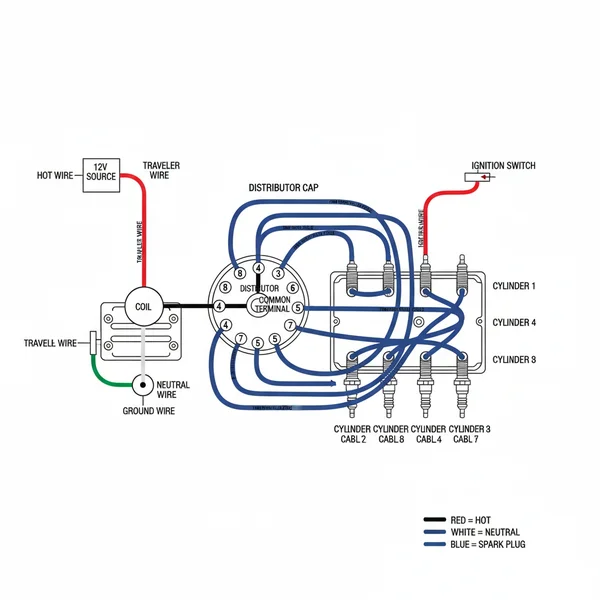
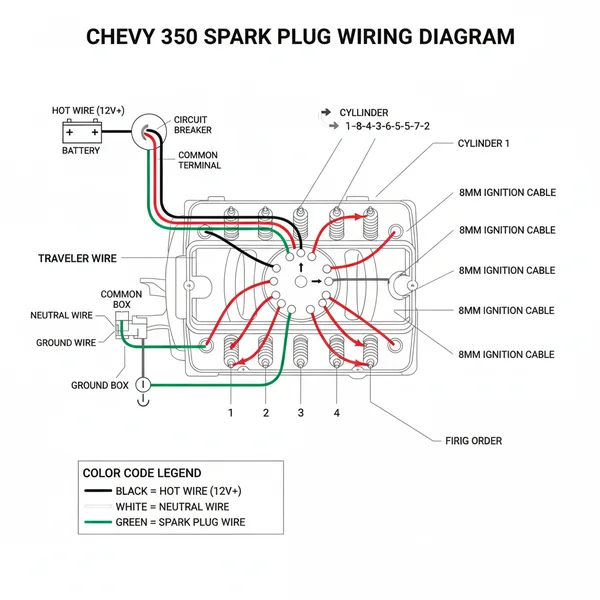
When approaching the high-tension secondary circuit on a small block V8, understanding the spark plug wiring diagram Chevy 350 configuration is vital for maintaining proper engine synchronization, preventing cross-firing, and ensuring efficient combustion. The Chevy 350 engine utilizes a mechanical distributor-driven ignition system, where low-voltage primary battery power feeds the ignition coil, which then steps up voltage into thousands of volts delivered sequentially to each cylinder via heavy-insulated spark plug wires. Technicians must always adhere to safety protocols outlined by the Society of Automotive Engineers under SAE J1128 standards for automotive primary and secondary wiring insulation ratings, ensuring all components withstand high under-hood thermal stress and dielectric breakdown.
💡 Technical Key Takeaways:
- Core Focus: Diagnostic schematic and terminal connection layout for Spark Plug Wiring Diagram Chevy 350.
- Target Scope: Field technicians, automotive DIYers, and residential/commercial electricians.
- Safety Rule: Always disconnect the primary power source/battery terminal and verify zero voltage with a multimeter before touching wires.
Secondary Ignition Circuit Parameters, Cable Gauges, and Diagnostic Values
Unlike standard DC low-voltage automotive harnesses, secondary ignition wires manage high-voltage pulses ranging from 20,000 to 50,000 volts. Because of these extreme potentials, conductors use suppression-core materials encased in thick silicone or EPDM jackets to suppress electromagnetic interference while maintaining structural integrity. When diagnosing these circuits, technicians rely on resistance checks rather than simple continuity, matching measurements against factory specifications per foot of wire length.
| Circuit Path | Typical Gauge / Protection | Multimeter Check |
|---|---|---|
| Ignition Coil Secondary Lead | 8mm to 8.5mm Silicone High-Temp Jacket | 3,000 to 10,000 ohms total resistance |
| Cylinder Spark Plug Wires | 7mm to 8.8mm Suppression Core / Kevlar | Approx. 1,000 ohms per foot (max 12,000 ohms) |
| Primary Coil Power Feed | 12 AWG Primary Wire / Fusible Link Protected | Battery voltage (~12.6V) with key in RUN position |
| Distributor Ground Path | Engine Block Metallic Ground Circuit | Less than 0.2 ohms resistance to battery negative |
Step-by-Step Diagnostic Workflow for Misfires and Spark Delivery Issues
Isolating a secondary ignition fault on a small block Chevy requires a methodical approach starting with a comprehensive visual inspection. Inspect spark plug wires for physical chafing against exhaust manifolds, carbon tracking inside the distributor cap, and secure terminal connections at both the spark plugs and distributor towers. To check for high resistance or internal core fractures, disconnect the battery using proper safety lockouts and isolate each wire. Set your digital multimeter to measure resistance (ohms), and probe both ends of the conductor. If resistance exceeds 12,000 ohms or displays an open circuit, replacement is mandatory. Next, perform a voltage-drop test on the primary ignition feed wire while cranking the engine to ensure the coil is receiving uninhibited system voltage without excessive resistance in the ignition switch or supply harness.
Common Failure Modes, Routing Errors, and High-Tension Safety Hazards
The most frequent operational issue on a classic Chevy 350 is induction cross-firing, which occurs when adjacent spark plug wires run parallel and touch each other, allowing high-voltage pulses to jump across insulation gaps. Mechanics must route plug wires using proper plastic looms and separators to maintain physical separation, particularly for cylinders 5 and 7, which sit adjacent in the firing order (1-8-4-3-6-5-7-2) and are notoriously prone to cross-fire induction ticks. Additionally, technicians should exercise extreme caution when working around live ignition circuits; secondary voltage can pierce human skin and cause severe muscle contractions or damage diagnostic equipment. Always disconnect the negative battery terminal before servicing distributor components or routing harnesses, and review guidelines found within Vehicle Wiring Diagrams to verify correct harness routing.
Technical FAQ for Small Block Chevrolet Ignition Layouts
What is the correct firing order for a standard Chevy 350 engine?
The standard firing order for a traditional small block Chevy 350 is 1-8-4-3-6-5-7-2. Cylinder numbers on the driver side from front to rear are 1, 3, 5, and 7, while the passenger side is 2, 4, 6, and 8, which must be strictly verified against your specific distributor cap terminal orientation.
How do I test for spark leakages or shorted plug wires in the dark?
Run the engine in a completely dark garage and use a spray bottle filled with water to mist a fine spray over the plug wires. If you observe visible electrical arcing, glowing blue sparks jumping to the exhaust manifolds, or hear a ticking noise, the wire insulation has broken down and requires immediate replacement.
Where can I find additional schematic guides for automotive and auxiliary systems?
For more detailed schematics covering everything from engine controls to auxiliary electronics, you can explore comprehensive resources available under Relay and Component Wiring Diagrams for deeper troubleshooting insights.
Explore More Professional Schematics and Wiring Resources
Whether you are tracing complex vehicle harnesses or studying electrical theory, having reliable documentation is essential for accurate diagnosis. Visit ReadWires.com to browse our complete library of professional automotive, residential, and industrial wiring guides.
Wiring Diagram Schematics & Details